By Farouk Tazerouti
I recently attended a conference organized by and held at Marmara University, called the International Congress on Academic Studies in Translation and Interpreting Studies from 30 September to 2 October 2026 at the university’s Göztepe campus in the busy town of Kadikoy.
There is obviously a large number of international conferences held globally each year. So, why this one? The title drew my attention in particular: the human translator: new roles and contexts.
While many other events now tend to focus on the role and impact of AI (a topic I must admit I am growing wary of), any discussion about human translation is indeed of particular interest to me, which is why I registered and flew to Istanbul without a moment’s hesitation.
And…it was worth it:
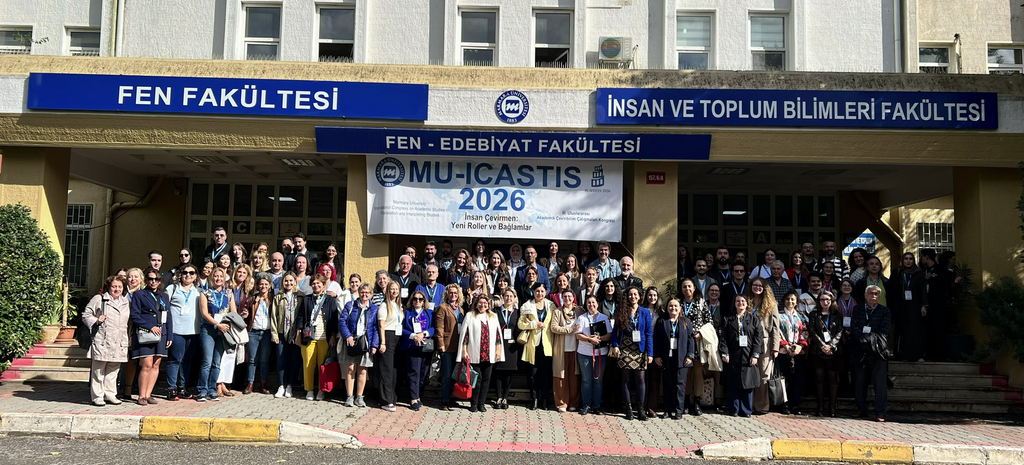
Speakers were from a range of countries including Algeria (well, myself!), Sweden, Austria, Estonia, Spain, Ireland, the UK (the brilliant Rebecca Tipton was there!), Japan, Germany and of course, a large number of experts from the host country’s different universities. The profiles included students, professors, researchers and practicing conference interpreters.
Topics included the History of translation, public service interpreting, translator & interpreter education and training, AI (not again!) and ethical considerations, literary and theatre translation, audiovisual translation, feminism, eco-translation, to name a few. There were much more topics as there were not only two (02) keynote speakers per day, but plenary and parallel sessions to cater for all types of interests and specialisations.
There also seems to be increasing interest in and focus on translation in disaster contexts, this comes as no surprise considering Türkiye’s situation as a country often shaken by strong earthquakes. Organisations like ARC have long been training disaster-ready interpreters and I was pleased to have discussed the potential collaboration between ARC and Algeria’s (also a seismic-prone country, unfortunately!) interpreters for the precious knowledge of risk and crisis communication to be disseminated globally.
This is but a glimpse at the various subjects covered by the event. There was a lot more and the above represents mere examples of the sessions conducted in English, which I attended. I will let you imagine the larger number of sessions in Turkish…awesome !
Parallel sessions were in English and in Turkish, with simultaneous interpretation provided by the university’s volunteer students who did a great job and were congratulated by the faculty during the closing session.
This is not the first time I attend a translation-related international conference in Türkiye. The country organizes several similar events each year, showing the interest it gives to languages in general and translation in particular. Especially that it is a country of migration where there are growing needs for language support services.
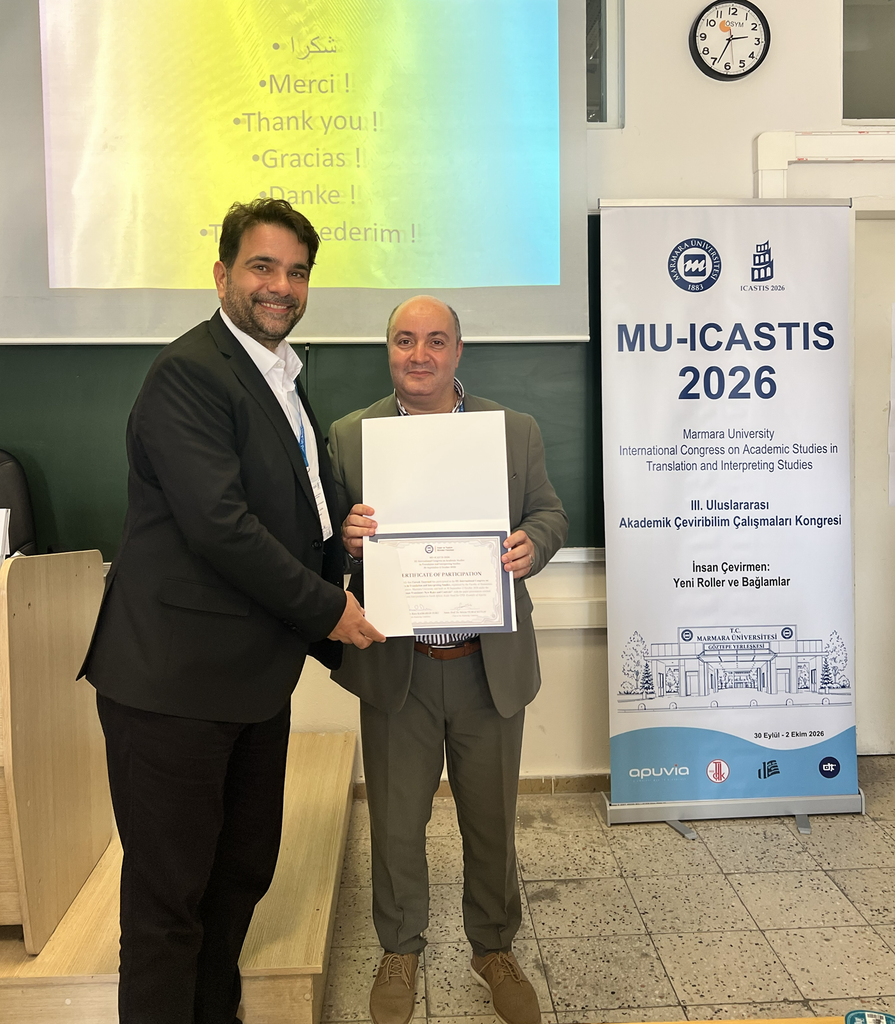
During my short presentation on day 3, I covered aspects related to the language(s) of Algeria, translation & interpreting education in the country, the sworn (legal) translation accreditation system in place and proudly spoke about the numerous CPD opportunities offered by the organisations I am affiliated (NWTN, AIT, ATC, METM).
This academic event was not only an opportunity for learning and networking, but also for sharing great discussions with like-minded people during poster sessions, tea and lunch breaks ! I am forever grateful, Marmara!